
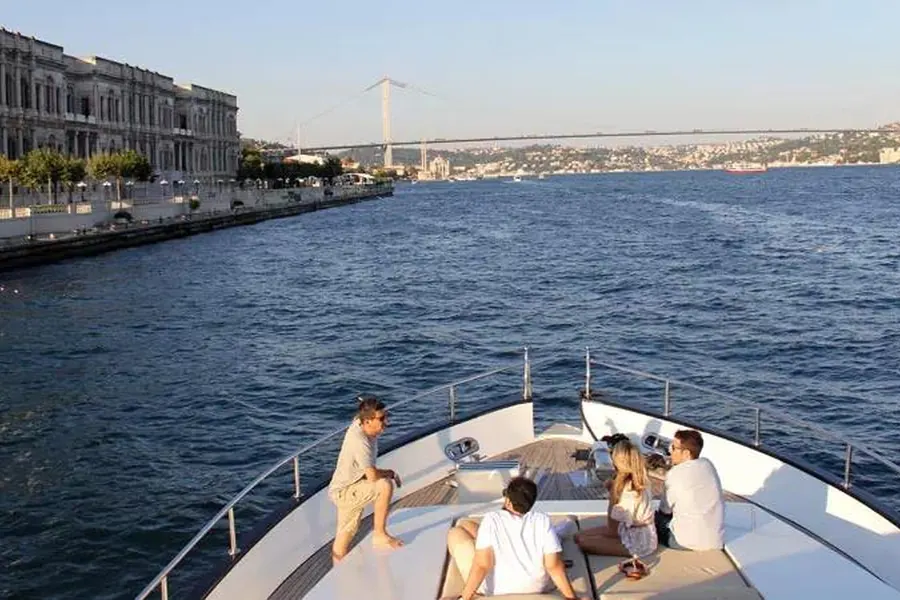
Ciragan Palace is the long white marble palace on the European shore of the Bosphorus, between Besiktas and Ortakoy. It sits at the centre of the chain of palaces and mansions that runs along the water from Dolmabahce to Yenikoy, with the wooded slopes of Yildiz Park rising behind it. Built for the last generation of Ottoman sultans, it witnessed many dramatic events in the empire's final decades and today is a luxury hotel.
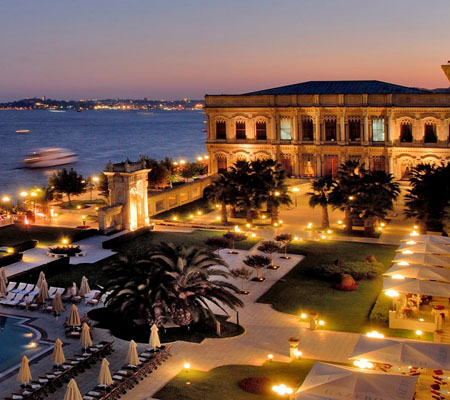
History of Ciragan Palace
From Tulip Era pavilions to a marble palace
Long before the present building, this stretch of shore was used for waterside pavilions. In the early 18th century, during the so-called Tulip Era, an earlier wooden palace stood here and the area became famous for festivals lit by torches and lanterns. The name Ciragan is usually linked to these illuminations, from a Persian word for torch or light.
Sultan Abdulmecid planned to replace the old wooden palace with a new one in a Western style, and the project was carried out under his successor, Sultan Abdulaziz, in the 1860s and early 1870s. The design is attributed to the architect Nikogos Balyan of the famous Balyan family, who also worked on Dolmabahce Palace. The facade is European in feel, while the interior decoration draws on Islamic and Moorish motifs often compared to the Alhambra in Spain. The cost was enormous, and part of it was financed with foreign loans.
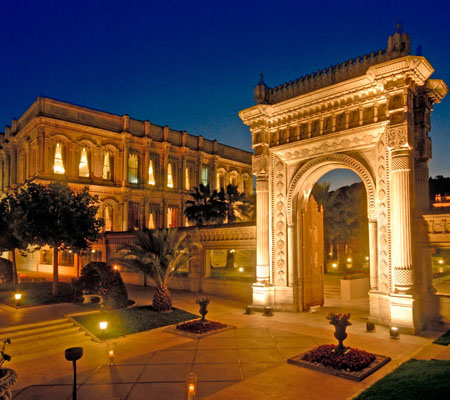
A palace of dramatic events
Ciragan served as a royal residence for only a short time. Sultan Abdulaziz lived here after he was deposed in 1876 and died at the palace soon afterwards. His successor, Murad V, was in turn deposed after a few months and spent the rest of his life confined at Ciragan.
In the early 20th century the palace housed the Ottoman parliament, but a fire in 1910 gutted the building, leaving only its outer walls. It stood as a ruin for decades.
Restoration as a hotel
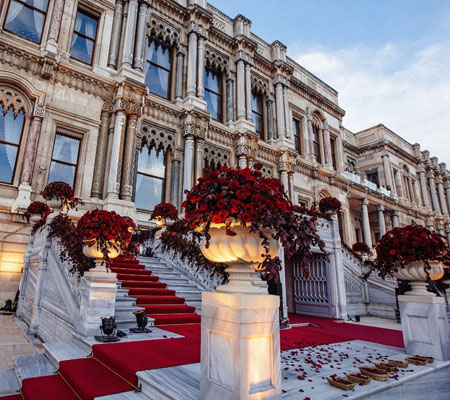
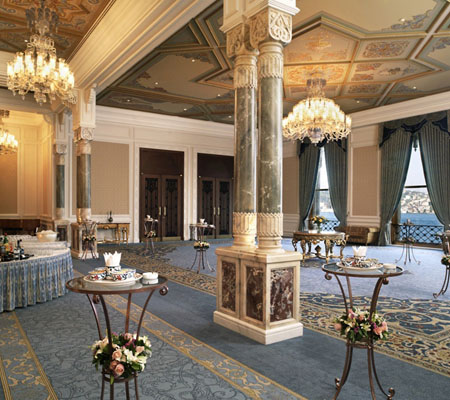
The palace was restored during the Republican period and, after a major renovation completed around 1990, reopened as part of a luxury hotel and events venue that also uses the Ciragan name. The restored palace is used for receptions, weddings and other events.
Ciragan Palace Architecture and Setting
The palace's best feature is its setting. Its marble facade stretches along the water, with a long quay and gardens facing the Asian shore. Look for the decorated window surrounds and columns, which show the mix of European and Islamic styles typical of late Ottoman palace architecture. The neighbouring Feriye palaces, built for members of the imperial family, continue the line of buildings towards Ortakoy.
Visiting Ciragan Palace
Because Ciragan is a hotel rather than a museum, there are no regular public tours of the interior. You can see it in three ways:
- From the water: the classic view of the facade is from a boat. Ciragan is one of the highlights of any Bosphorus cruise.
- From the road: Ciragan Avenue runs behind the palace between Besiktas and Ortakoy, and you can combine it with a walk to Ortakoy and up into Yildiz Park.
- As a guest: the hotel's restaurants and events are the main way to see the inside.
How to get there
Ciragan is on the European shore between Besiktas and Ortakoy. Buses run along Ciragan Avenue, and the Besiktas ferry pier is a short walk away. Dolmabahce Palace is a little further south, so the two are easy to see on the same day.
Seeing Ciragan Palace from the Bosphorus
The palace looks its best from the water, especially at sunset or when it is lit up at night. On a private Bosphorus yacht cruise you can ask the captain to slow down along the European shore for photos, and our Bosphorus mansions cruise focuses on the palaces and yali houses of both shores. To learn about the other royal residences of the city, see our guide to palaces and pavilions in Istanbul.
Frequently asked questions
Can you visit Ciragan Palace?
Ciragan Palace is now a luxury hotel, so there are no regular public tours. You can see its facade from the road and, best of all, from a boat on the Bosphorus.
Who built Ciragan Palace?
It was built for Sultan Abdulaziz in the 1860s and early 1870s, on a project begun under Sultan Abdulmecid, and is attributed to the architect Nikogos Balyan.
What happened to Ciragan Palace in 1910?
The palace, which then housed the Ottoman parliament, was gutted by a fire in 1910 and stood as a ruin for decades before its restoration.
Where is Ciragan Palace?
It is on the European shore of the Bosphorus in Besiktas, between Besiktas and Ortakoy, below Yildiz Park.
See the Bosphorus on your own yacht
A private yacht cruise with captain and crew, only for your group: sunset, dinner or a full day on the strait. Book directly with a TURSAB-licensed Istanbul operator.
More from our Istanbul guide
- The Bosphorus Strait in Istanbul: History, Geography and LandmarksBosphorus and cruises
- Beylerbeyi Palace in Istanbul: History and Visitor GuideBosphorus and cruises
- Istanbul Bosphorus Guide: Landmarks, Villages and CruisesBosphorus and cruises
- Best Bosphorus Cruises in Istanbul: Which One to ChooseBosphorus and cruises