
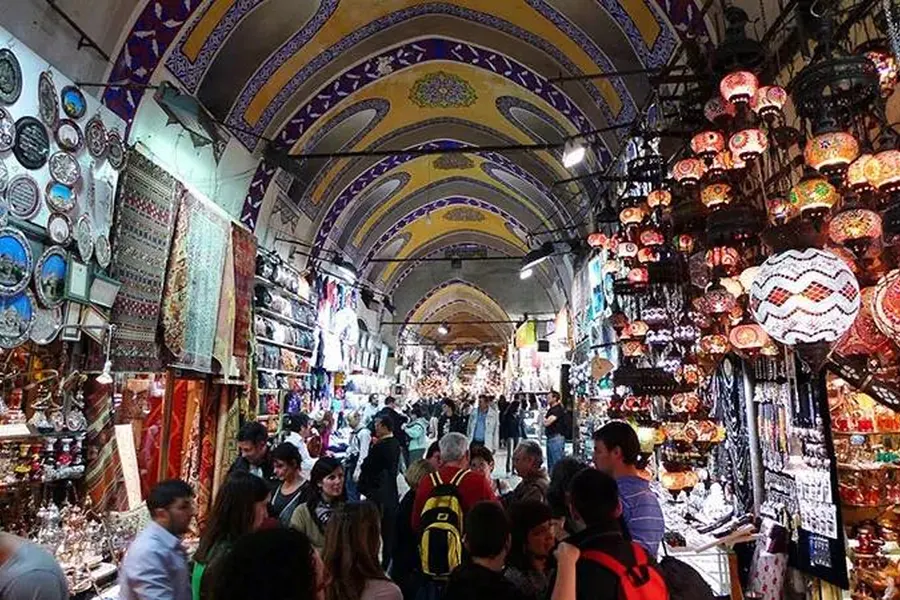
The Grand Bazaar (Kapalıçarşı, the "Covered Market") in Istanbul's Beyazıt district is one of the oldest and largest covered markets in the world. It has been trading for more than 550 years, and its maze of vaulted streets is packed with jewellery shops, carpet dealers, lamp sellers and tiny workshops. Even if you do not plan to buy anything, wandering through it is one of the classic experiences of the old city.
History of the Grand Bazaar
The bazaar began soon after the Ottoman conquest of 1453. Sultan Mehmed II had a domed stone hall built for the trade in valuable goods, now known as the Old Bedesten or Cevahir Bedesten, and the market grew around it. A second hall, the Sandal Bedesten, was added later, and over time the streets between them were roofed over.
Fires and earthquakes damaged the bazaar several times, and it was rebuilt and repaired after each one. Western travellers wrote about it at length in their memoirs, and it remains one of the most important historic buildings in Istanbul. Today it covers a large area of covered streets with thousands of shops, as well as hans (old trading inns), small mosques, fountains and cafés.
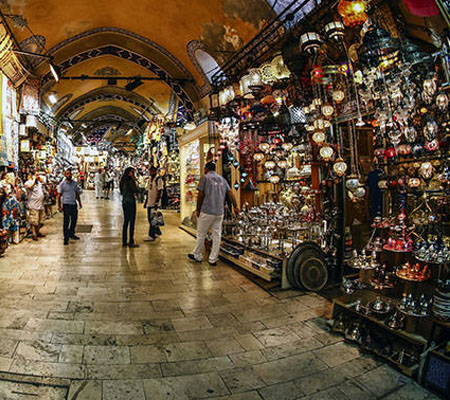
Shopping in the Grand Bazaar: What to Buy
The Grand Bazaar is a major centre of Istanbul's gold and jewellery trade, and the main street, Kalpakçılar Caddesi, is lined with jewellers. Other goods are grouped in their own areas, which makes browsing easier. Popular things to buy include:
- Carpets and kilims with traditional Turkish motifs
- Gold and silver jewellery
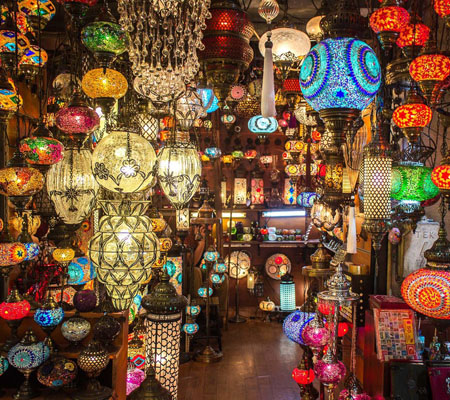
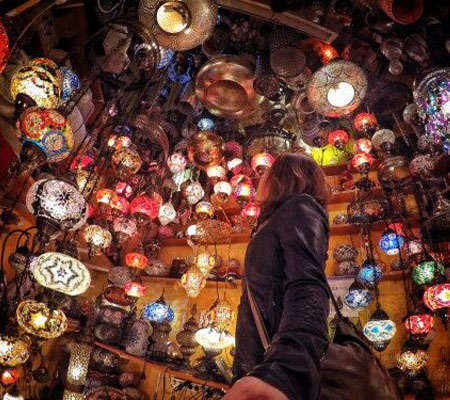
- Mosaic glass lamps and lanterns
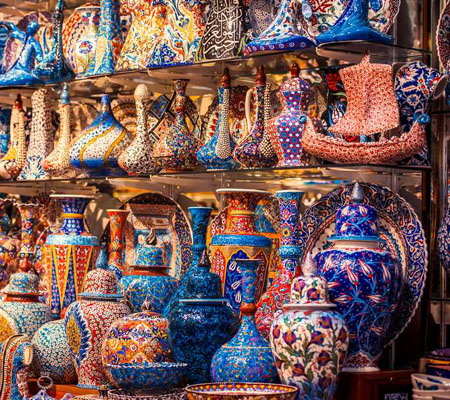
- Ceramics and hand-painted bowls and tiles
- Copper and brass items, from coffee pots to trays
- Leather jackets and bags
- Peştemal (Turkish towels) and embroidered textiles
- Backgammon and chess sets, onyx and antiques
- Turkish delight, spices and tea
For spices, dried fruit and Turkish delight, the Spice Bazaar (Egyptian Bazaar) in Eminönü often has a wider choice. To learn more before you buy a rug, visit the Foundations Carpet Museum in Sultanahmet.
Tips for Visiting and Bargaining
- Bargaining is expected in most shops, especially for carpets, leather and souvenirs. Stay friendly, decide in advance what you are willing to pay and be ready to walk away.
- Compare prices in several shops before you buy anything expensive.
- For jewellery and carpets, ask for a receipt and, where relevant, a certificate.
- Many shops accept cards, but cash can help when bargaining.
- Pick a gate as a meeting point. It is easy to get lost in the side streets, and the gates are numbered and named.
- Watch your bag and phone in crowded areas.
- Go in the morning for a calmer visit. Afternoons and Saturdays are the busiest times.
- Stop for a glass of tea or Turkish coffee in one of the small cafés inside the bazaar.
Grand Bazaar Opening Days and Entrance
Entry to the Grand Bazaar is free. It opens every day except Sundays and public holidays, and it is closed on the first days of religious holidays. Opening hours can change, so check them before you go, especially on holidays.
How to Get to the Grand Bazaar
- Tram: take the T1 line to the Beyazıt-Kapalıçarşı stop, next to the Beyazıt Gate, or to Çemberlitaş, close to the Nuruosmaniye Gate.
- On foot from Sultanahmet: it is a walk of around 15 minutes from Hagia Sophia, the Basilica Cistern and the Hippodrome, along Divanyolu Avenue.
- From the Spice Bazaar: walk uphill through the busy market streets of Mahmutpaşa, around 15 to 20 minutes.
What to See Nearby
The Nuruosmaniye Mosque stands just outside the gate of the same name, and the Süleymaniye Mosque is a short walk uphill. Both are working mosques, so dress modestly and expect them to close to visitors during prayer times. The bazaar is also part of our Istanbul old city tour, which covers the main sights of Sultanahmet with a guide. For more ideas, see our list of the top things to do in Istanbul.
Frequently asked questions
Is the Grand Bazaar free to enter?
Yes. There is no entrance fee for the Grand Bazaar.
Is the Grand Bazaar open on Sundays?
No. The Grand Bazaar is closed on Sundays and public holidays, and on the first days of religious holidays.
Do you have to bargain in the Grand Bazaar?
Bargaining is normal in most shops, especially for carpets, leather and souvenirs. Be polite, compare prices and be ready to walk away.
How long should I spend in the Grand Bazaar?
Allow one to two hours to wander and browse, or longer if you plan to shop for carpets or jewellery.
What is the difference between the Grand Bazaar and the Spice Bazaar?
The Grand Bazaar is much larger and sells jewellery, carpets, lamps, leather and souvenirs. The Spice Bazaar in Eminönü focuses on spices, dried fruit, nuts and Turkish delight.
End your sightseeing day on the water
After the old city, see the palaces and mansions from the Bosphorus on a private sunset yacht cruise, only for your group.
More from our Istanbul guide
- Istanbul Archaeology Museums: History, Highlights and Visitor TipsIstanbul sights
- Basilica Cistern in Istanbul: History, Medusa Heads and Visitor TipsIstanbul sights
- The Blue Mosque in Istanbul: History, Architecture and Visitor TipsIstanbul sights
- Churches to Visit in Istanbul: Byzantine, Orthodox and CatholicIstanbul sights