
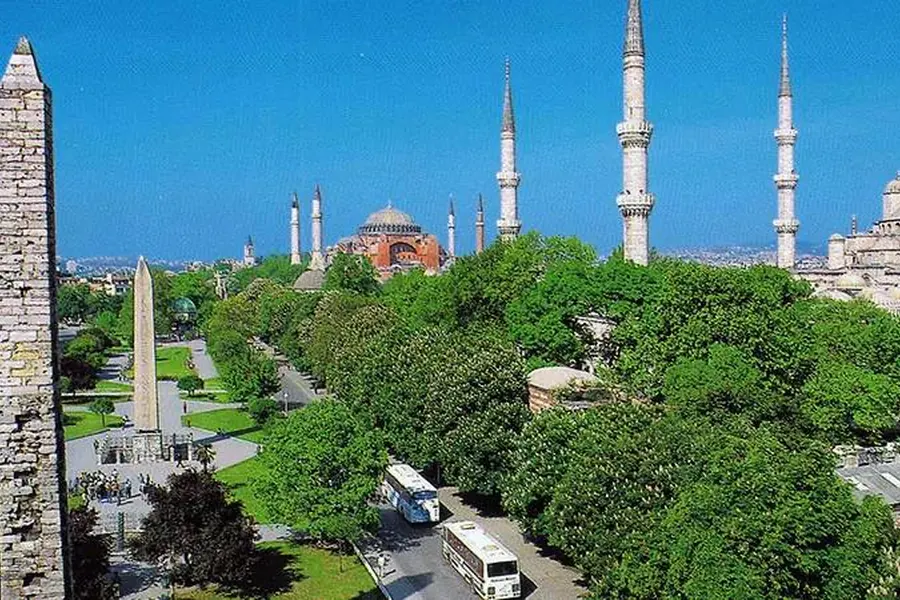
The Sultanahmet Hippodrome was the sporting and political heart of Byzantine Constantinople, where chariot races drew huge crowds. Today the long, open square is called Sultanahmet Meydanı, or At Meydanı (Horse Square) in Ottoman times, and it sits between the Blue Mosque and the Museum of Turkish and Islamic Arts. Three ancient monuments still stand along the line of the old racetrack.
History of the Hippodrome of Constantinople
A hippodrome was first built here in the early 3rd century under the Roman emperor Septimius Severus. When Constantine the Great made the city his new capital in 330, he enlarged it greatly. The racetrack is thought to have held around 100,000 spectators, and the emperor watched the races from a royal box connected to the Great Palace.
Chariot racing teams, above all the Blues and the Greens, had fanatical supporters who were also powerful political factions. In 532 their rivalry turned into the Nika riots, which burned much of the city, including the earlier Hagia Sophia church. The uprising ended with thousands killed in the Hippodrome itself.
The Hippodrome was decorated with statues brought from across the empire. Many were lost when Crusaders sacked the city in 1204. The most famous survivors are the four bronze horses taken to Venice, which now belong to St Mark's Basilica. In the Ottoman period the area became a parade ground and a venue for festivals, and the buildings of the Blue Mosque complex were built along its edge.
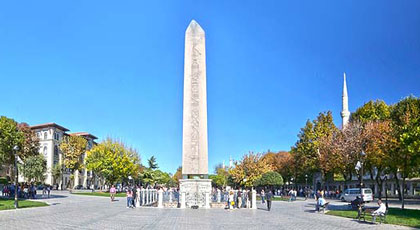
Monuments of the Hippodrome: Obelisk, Serpent Column and German Fountain
Four monuments stand in the square today. Walking from the north end, you pass them in this order:
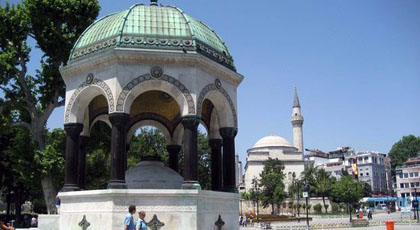
- German Fountain: an octagonal, domed fountain given to the city by the German Emperor Wilhelm II as a sign of Turkish-German friendship, following his visit in 1898.
- The Obelisk of Theodosius: an Egyptian obelisk of Pharaoh Thutmose III, covered in hieroglyphs, brought from Egypt and erected here in 390 by Emperor Theodosius I. Its marble base shows the emperor at the races, and an inscription boasts of how quickly it was raised.
- The Serpent Column: a bronze column of three intertwined snakes, made in Greece to celebrate the victory over the Persians at Plataea in 479 BC and moved here from Delphi by Constantine. The snake heads have broken off; part of one is in the Istanbul Archaeology Museums.
- The Walled Obelisk: a rough stone obelisk that was once covered with gilded bronze plates, restored by Emperor Constantine VII in the 10th century. The plates were stripped off in 1204.
Read more in our guides to the Sultanahmet obelisk and the German Fountain.
Landmarks Around Sultanahmet Square
The Hippodrome is the natural starting point for exploring the old city, as many of Istanbul's best-known sights are within a few minutes' walk.
Pargalı İbrahim Pasha Palace (Museum of Turkish and Islamic Arts)
On the western side of the square stands the palace of Pargalı İbrahim Pasha, the grand vizier and brother-in-law of Suleiman the Magnificent. It now houses the Museum of Turkish and Islamic Arts. See our guide to the Ibrahim Pasha Palace.
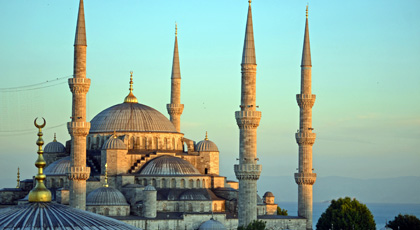
Blue Mosque (Sultanahmet Mosque)
The Blue Mosque lines the eastern side of the Hippodrome. It takes its popular name from the high-quality İznik tiles that decorate its interior. As a working mosque, it closes to visitors during prayer times, and modest dress is required. Read our Blue Mosque guide.
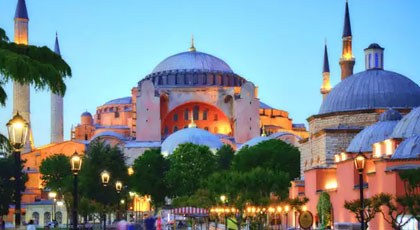
Hagia Sophia
Hagia Sophia, completed under Justinian in 537, stands at the northern end of Sultanahmet Square. After the Ottoman conquest in 1453, the first Friday prayer was held here. It was a museum from 1934 and has been a mosque again since 2020; foreign visitors now use a separate paid route to the upper gallery. See our Hagia Sophia guide.
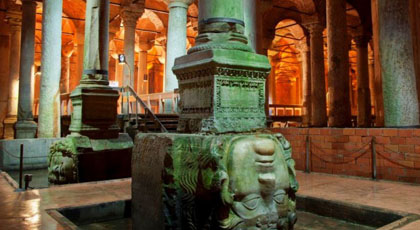
Basilica Cistern
Across the tram line from Hagia Sophia, the Basilica Cistern was built in the Byzantine period to store water for the palace. Its forest of columns and the Medusa heads still impress, and it reopened in 2022 after a major restoration. Read our Basilica Cistern guide.
Topkapı Palace
Behind Hagia Sophia, Topkapı Palace was the home of the Ottoman sultans and their families for centuries. See our Topkapı Palace guide.
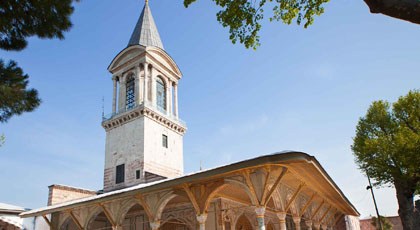
Hagia Irene and Soğukçeşme Street
In the first courtyard of Topkapı Palace stands Hagia Irene, a Byzantine church contemporary with Hagia Sophia that was never turned into a mosque. Between Hagia Sophia and the palace walls, Soğukçeşme Street is lined with restored wooden houses with bay windows.
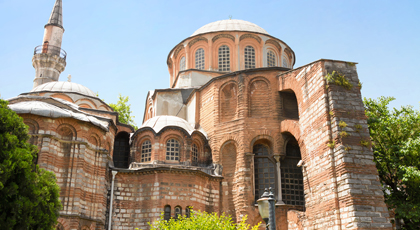
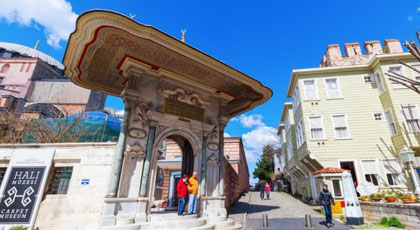
Museums nearby
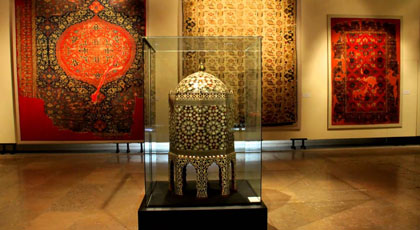
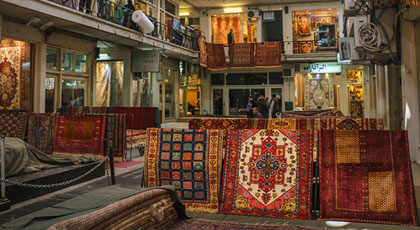
The Istanbul Archaeology Museums, just below Topkapı Palace, hold one of the largest collections in the world. The Foundations Carpet Museum displays historic carpets from the Seljuk and Ottoman periods that were donated to mosques and tombs.
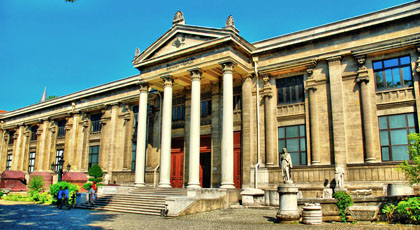
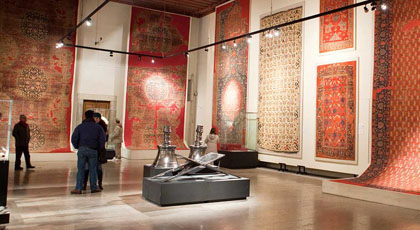
Little Hagia Sophia and the Grand Bazaar
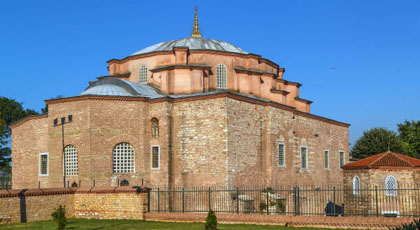
A short walk south, Little Hagia Sophia was built as a church by Justinian and Theodora in the 530s and converted into a mosque after the conquest. To the west, the Grand Bazaar in Beyazıt has been trading since the 15th century.
Visiting the Hippodrome: Practical Tips
- Getting there: take the T1 tram to the Sultanahmet stop, a short walk from the square.
- The Hippodrome is a public square, open at all times and free to walk through.
- Go early in the morning or late afternoon to see the monuments without the crowds and in softer light.
- The obelisk base is the best-preserved part of the carvings: walk all the way round it to see the emperor and the race scenes.
To see the Hippodrome and its neighbours with a guide, join our Istanbul old city tour, or combine the sights with an evening on the water on the Sultanahmet tour and sunset cruise.
Frequently asked questions
What was the Hippodrome of Constantinople used for?
It was the city's chariot-racing stadium and its main public gathering place, where emperors appeared before the people and political factions clashed.
What can you see at the Hippodrome today?
You can see the Egyptian Obelisk of Theodosius, the Serpent Column from Delphi, the Walled Obelisk and the German Fountain, all standing along the line of the old racetrack.
Is the Sultanahmet Hippodrome free to visit?
Yes. It is a public square that is free and open to walk through at any time.
How old is the obelisk in Sultanahmet?
The obelisk was made for Pharaoh Thutmose III in the 15th century BC and was erected in the Hippodrome in 390 by Emperor Theodosius I.
End your sightseeing day on the water
After the old city, see the palaces and mansions from the Bosphorus on a private sunset yacht cruise, only for your group.
More from our Istanbul guide
- Istanbul Archaeology Museums: History, Highlights and Visitor TipsIstanbul sights
- Basilica Cistern in Istanbul: History, Medusa Heads and Visitor TipsIstanbul sights
- Chora Church (Kariye Mosque) in Istanbul: History and Visitor GuideIstanbul sights
- Galata Tower in Istanbul: History, Legends and Visitor GuideIstanbul sights